wild cast — jewelry
2026 Santa Cruz Open Studios participant
Wild Cast Jewelry · Santa Cruz, California

Impermanent nature,made permanent.

Seed pods, branches, acorns, leaves and other specimens are gathered in Santa Cruz and cast in sterling silver and bronze, using the lost-wax casting method. Inside the mold, the original burns away — what remains is its exact form, but in metal.

Method
Lost-wax casting, by hand
Metals
Sterling silver · bronze · shibuichi
Edition
Often one of a kind — the original is consumed in the process
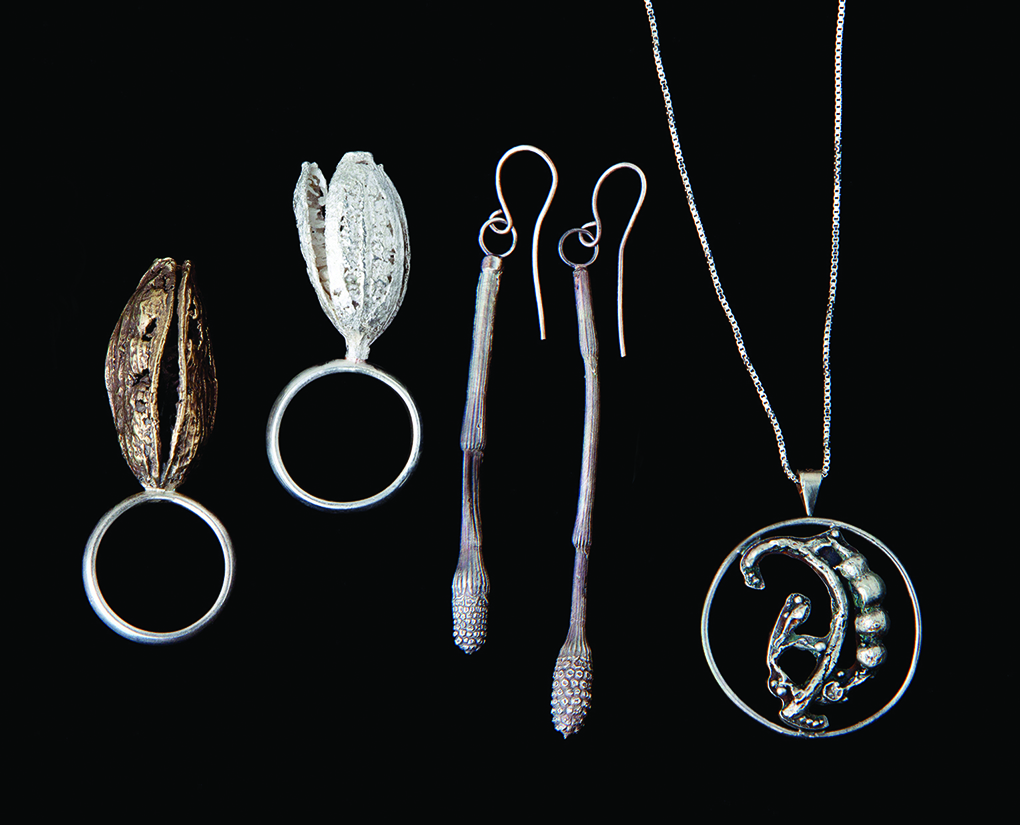
Iris seed pod rings and horsetail earrings, sterling silver and bronze
Iris pods and horsetailsSterling silver and bronze
Scroll
The idea

Wei chooses what to cast by shape and texture first: a seed pod beginning to split along its seam, the toothed edge of a leaf. Then by size, thickness and material — because both the casting process and also wearability warrant considerations.

The metal records an extraordinary amount of detail, and many of the castings are left unpolished or minimally polished to retain the original texture. Often, the original botanical form is consumed in the process — and therefore one of a kind.

The workSelected castings

A tree of what was found.

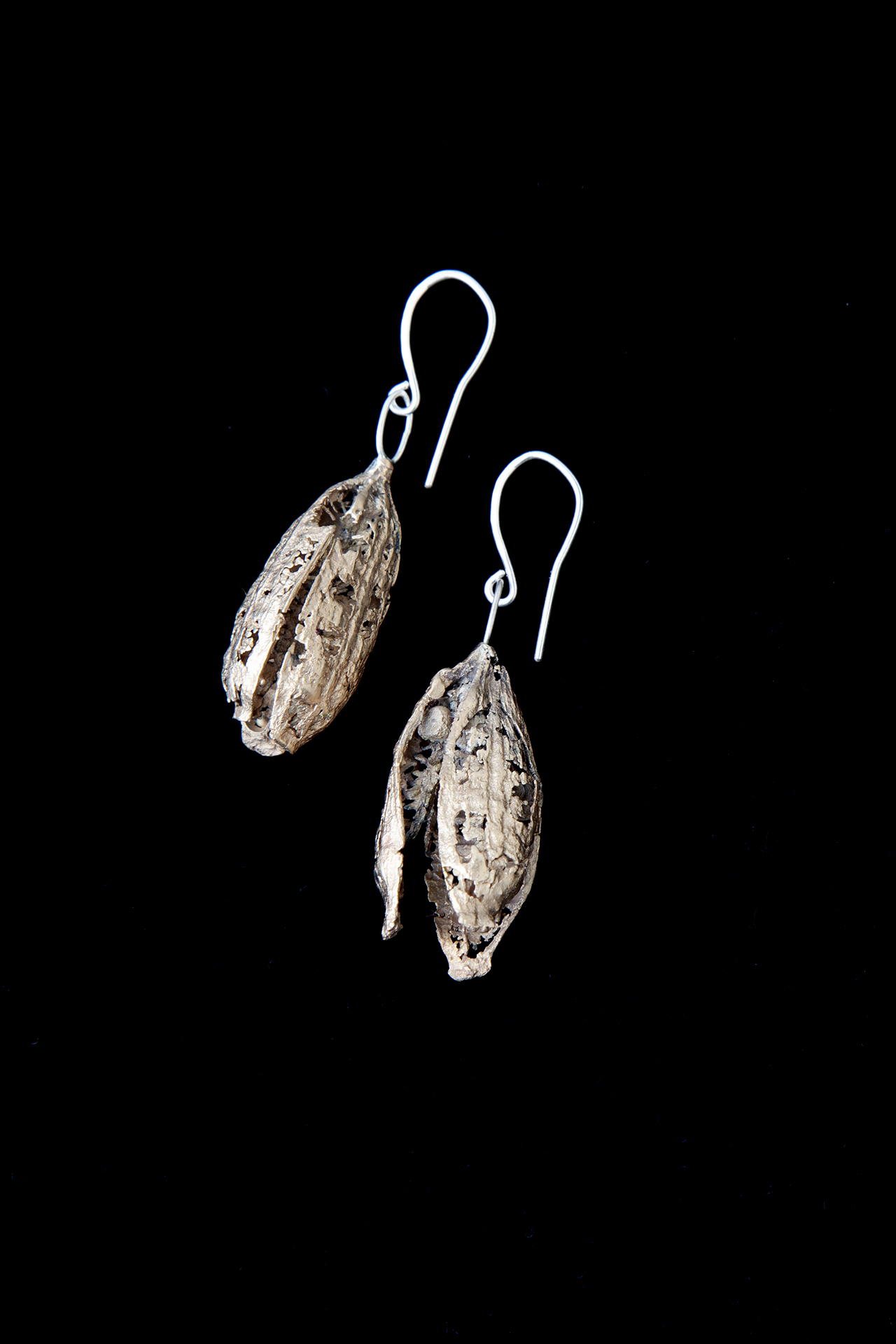
Earrings cast from iris seed pods, bronze
01Earrings

Iris seed pods, in bronze.

Pods and shells contain extra calcium, rendering negative spaces and unpredictable results. Some castings render incompletely and must be melted back down; the ones that cast more completely are often the favorites.
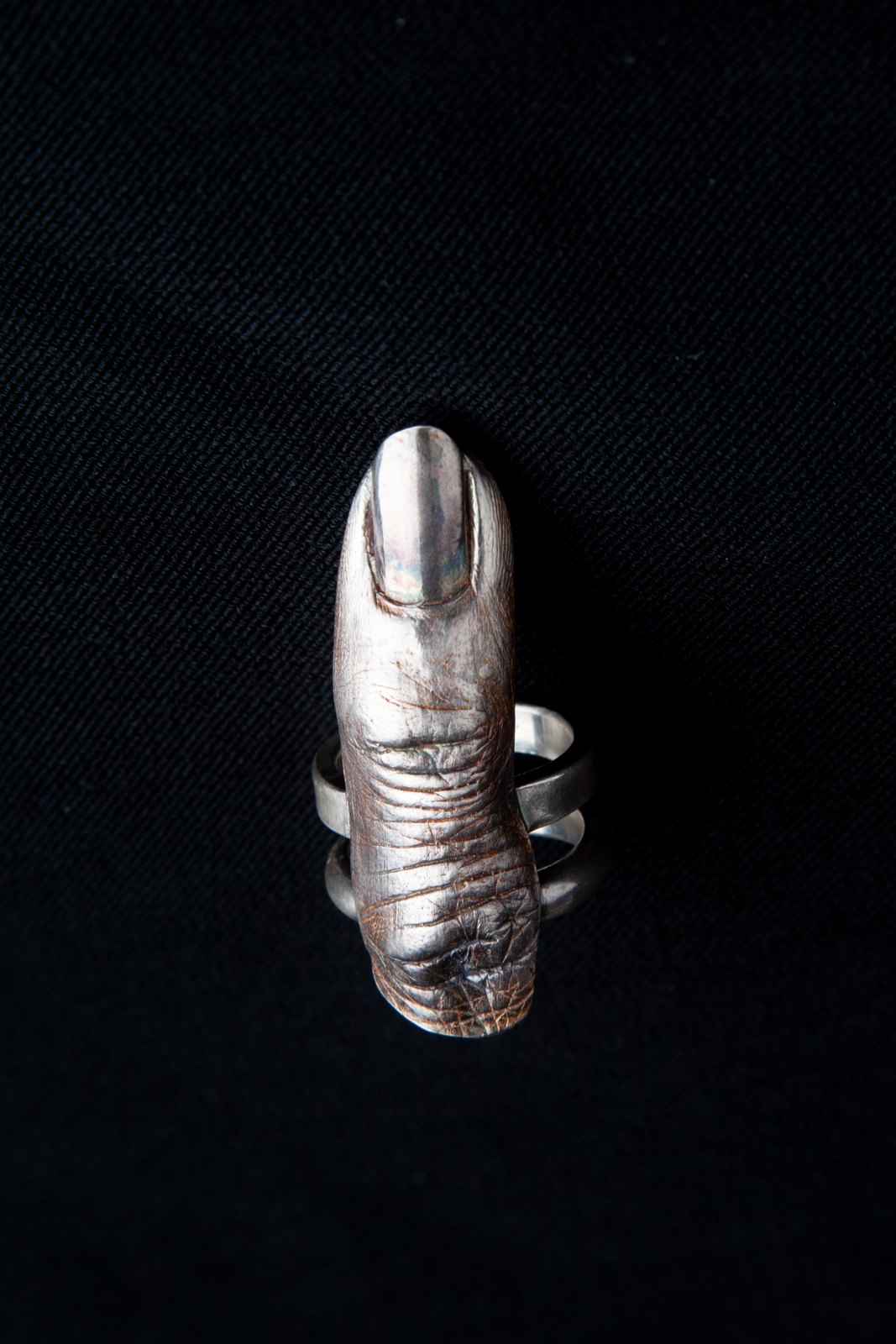
A cast of the artist's finger in sterling silver, worn as a ring
02Ring

Finger of artist, in sterling silver.

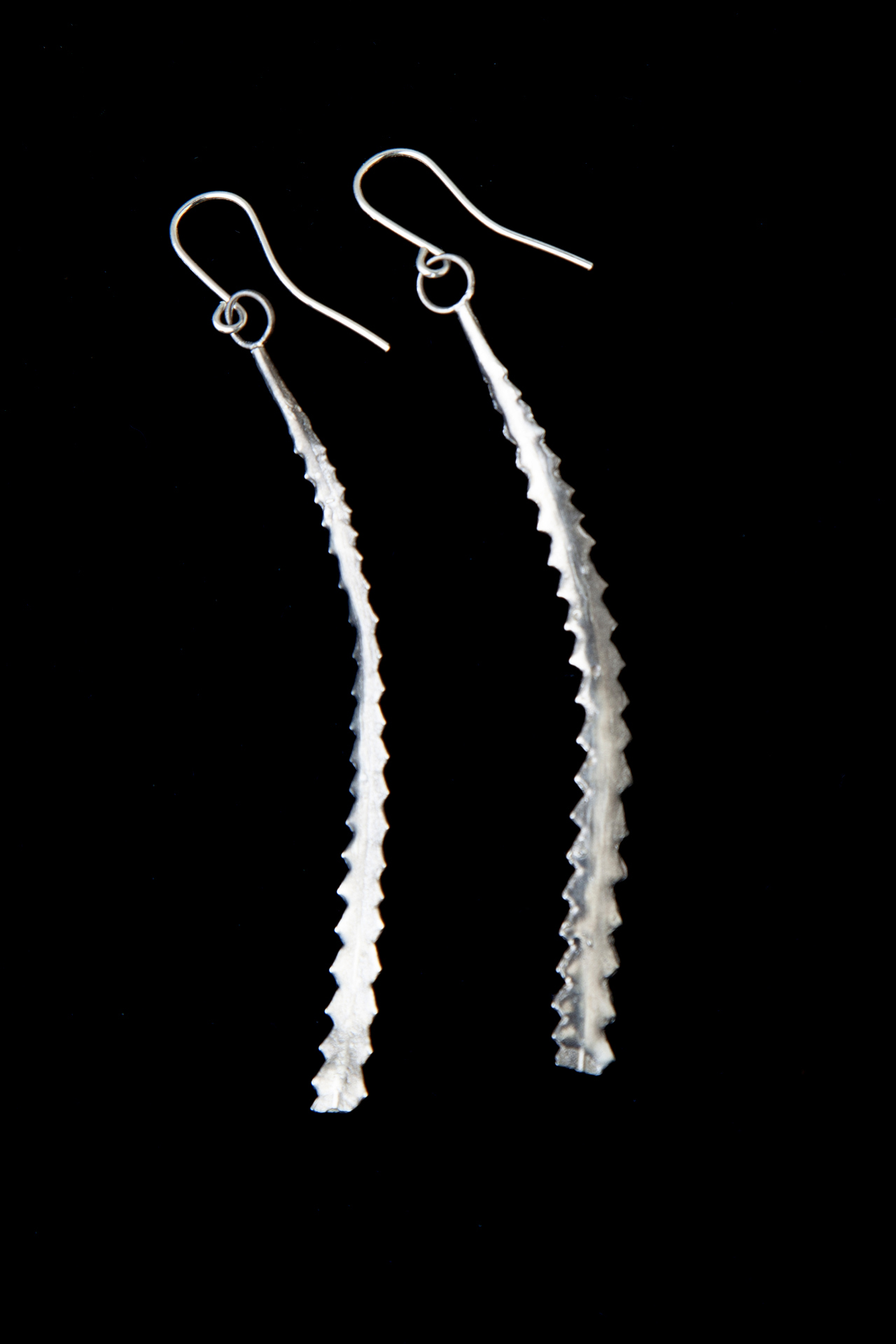
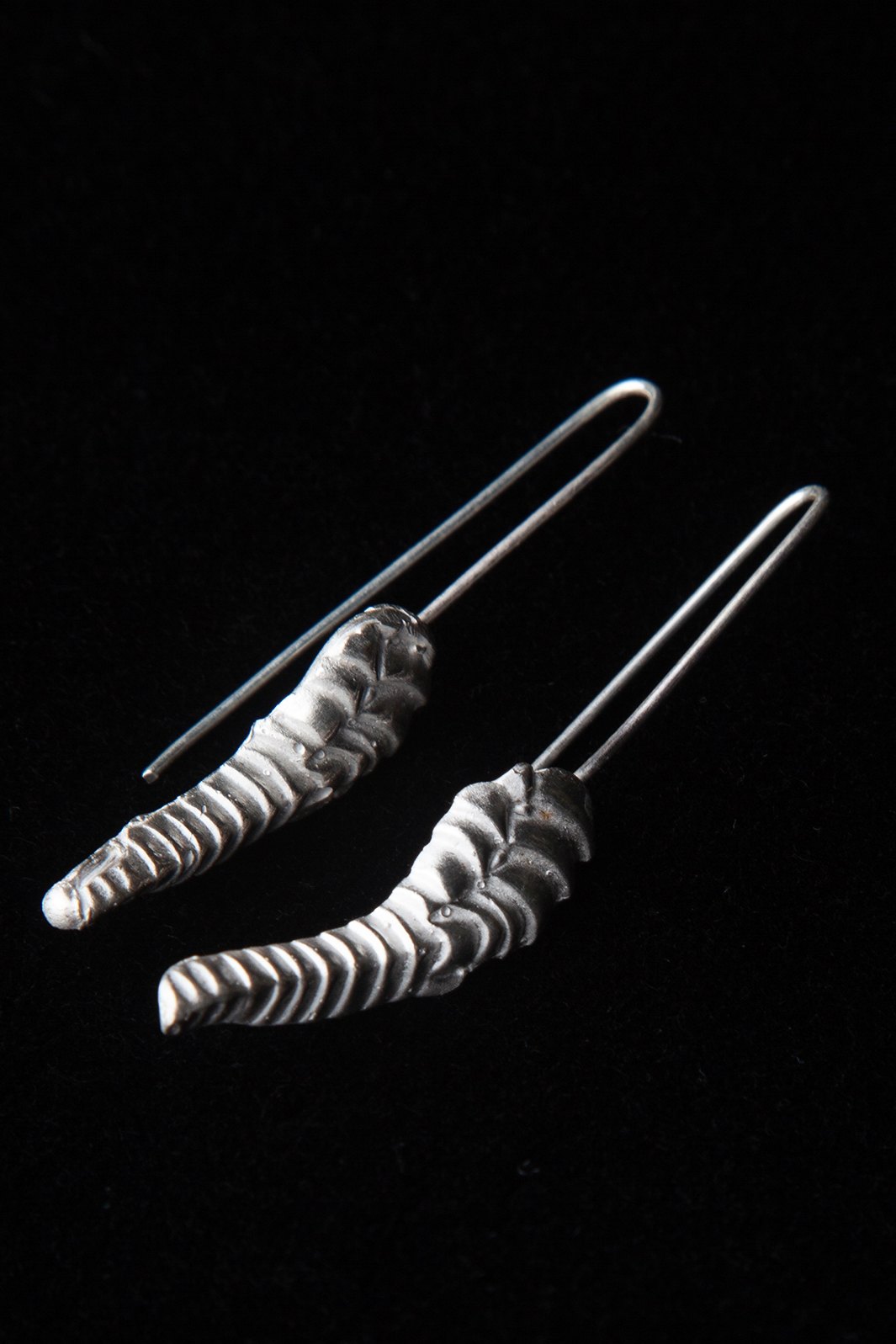
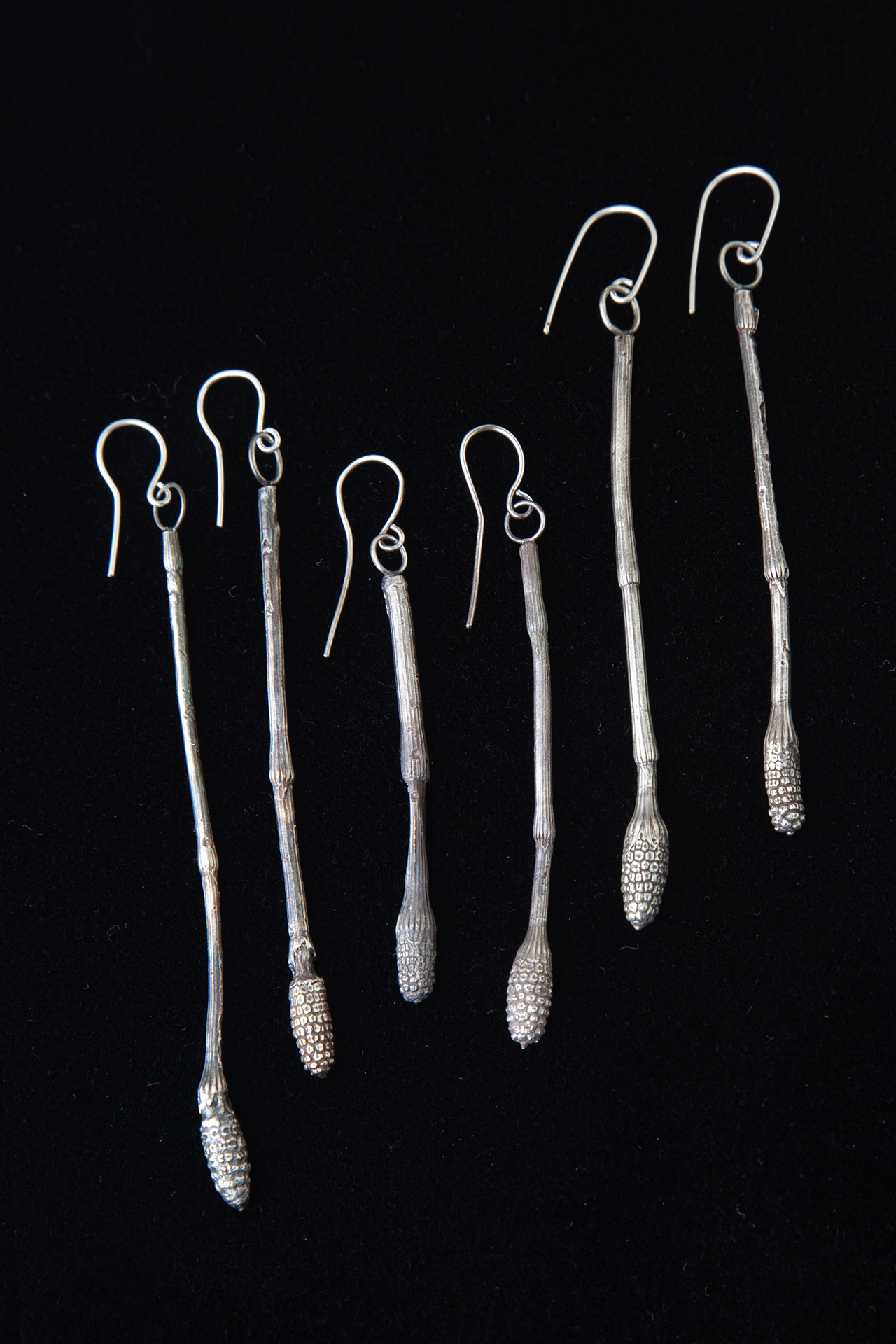
Six horsetail earrings of different lengths, sterling silver
03Earrings

Horsetail family, in sterling silver.

Equisetum hyemale, an ancient, primitive plant family. The silver retains the detailed vasculature of the stalk and the texture of the spore cones.

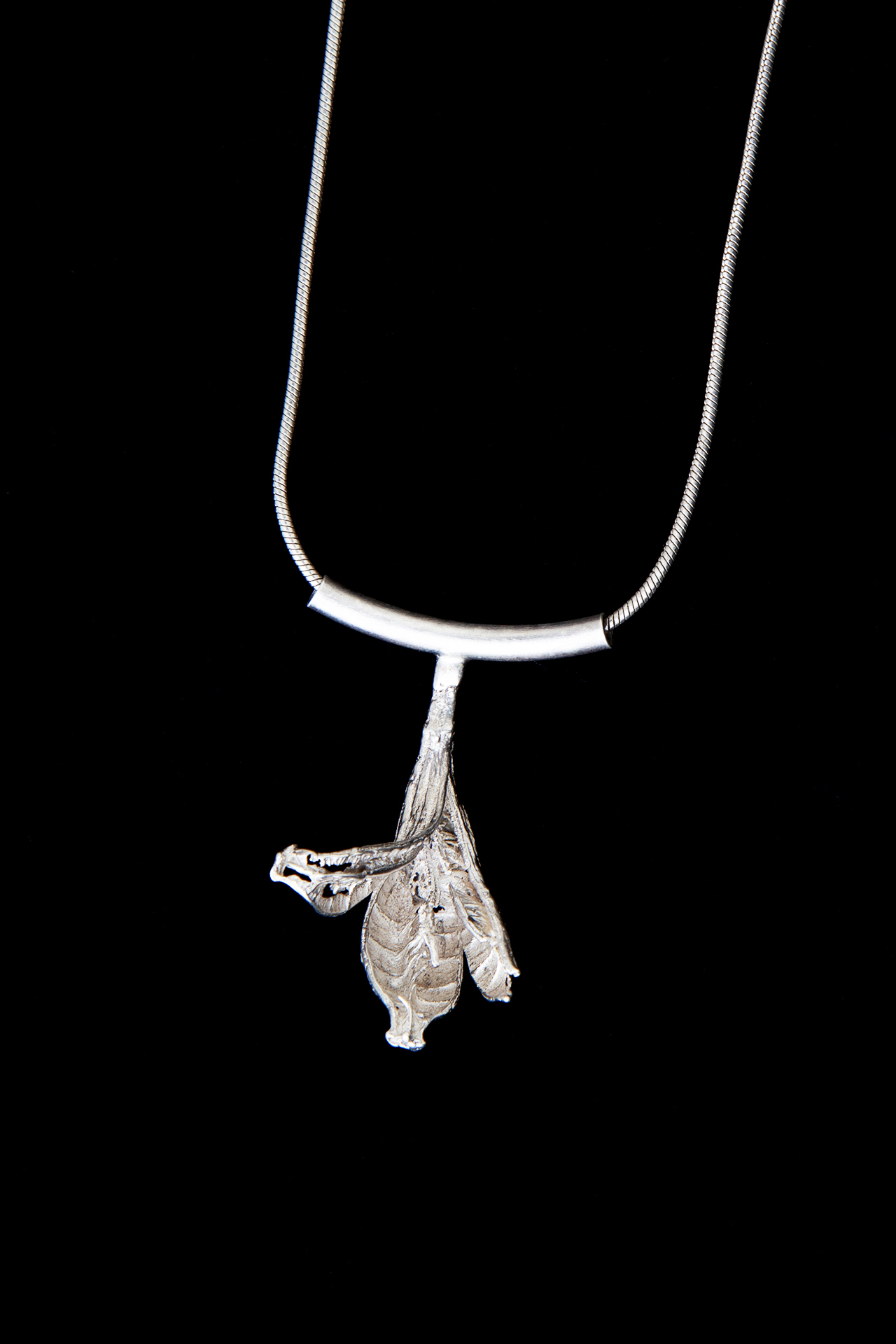
Pendant of an iris seed pod cast in sterling silver, on a snake chain
04Pendant

Iris seed pod, in sterling silver.

Pair of protea leaf earrings cast in sterling silver
05Earrings

Protea leaf, in sterling silver.

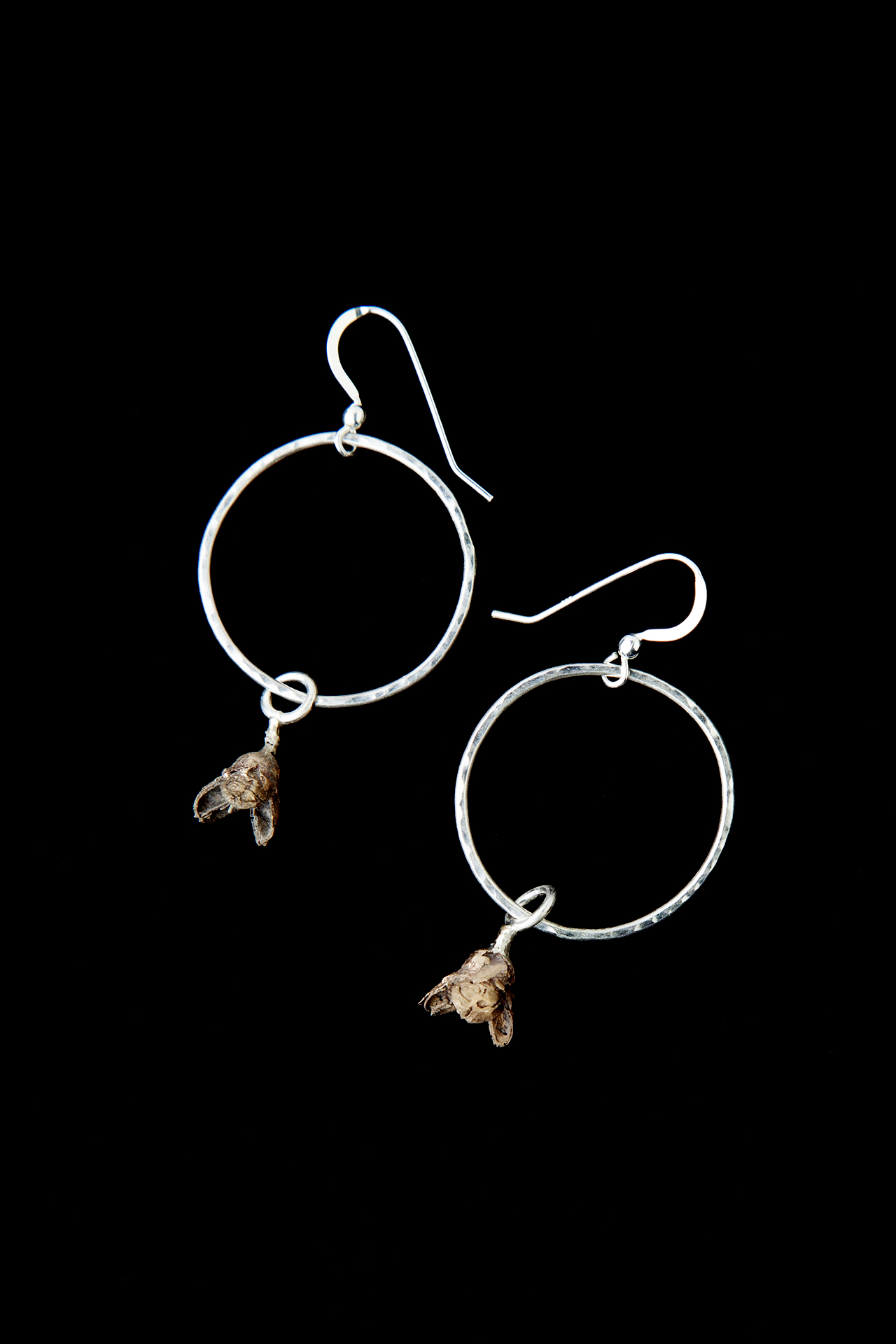
Bronze buds cast whole, on classic sterling silver hoops
06Earrings

Bronze buds, cast whole.

On a classic sterling silver hoop.

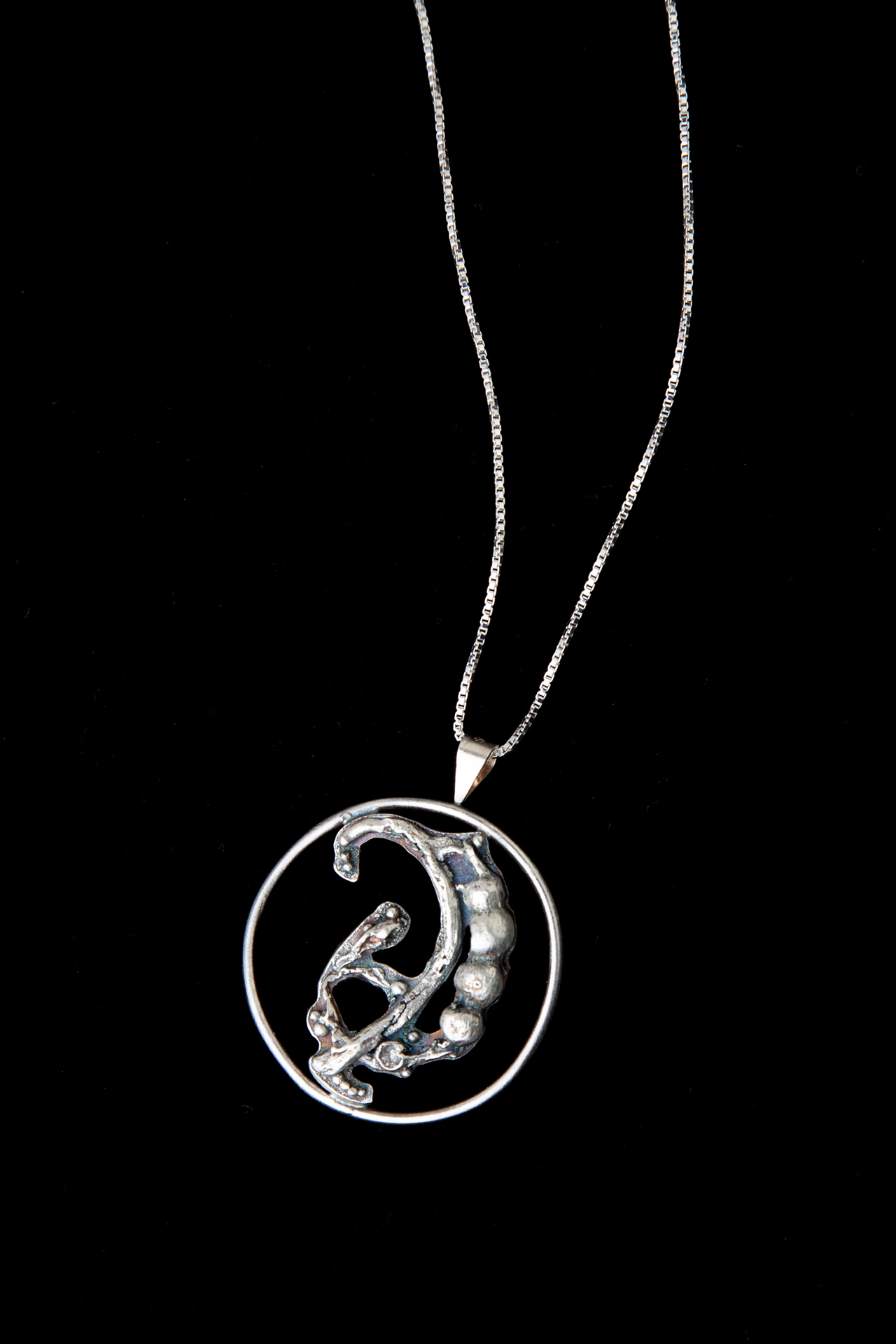
Seaweed form cast in silver, held in a circle pendant on a box chain
07Pendant

Seaweed form, in sterling silver.

Succulent square dangle earrings, cast in silver
08Earrings

Succulent, in sterling silver.

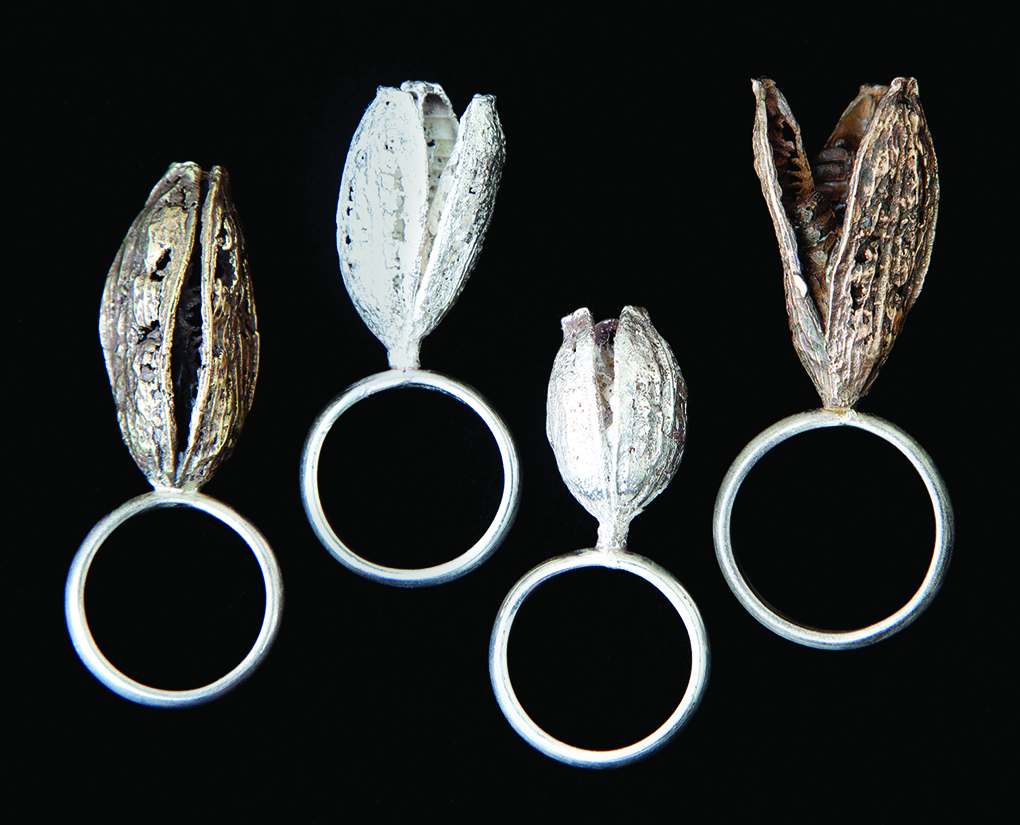
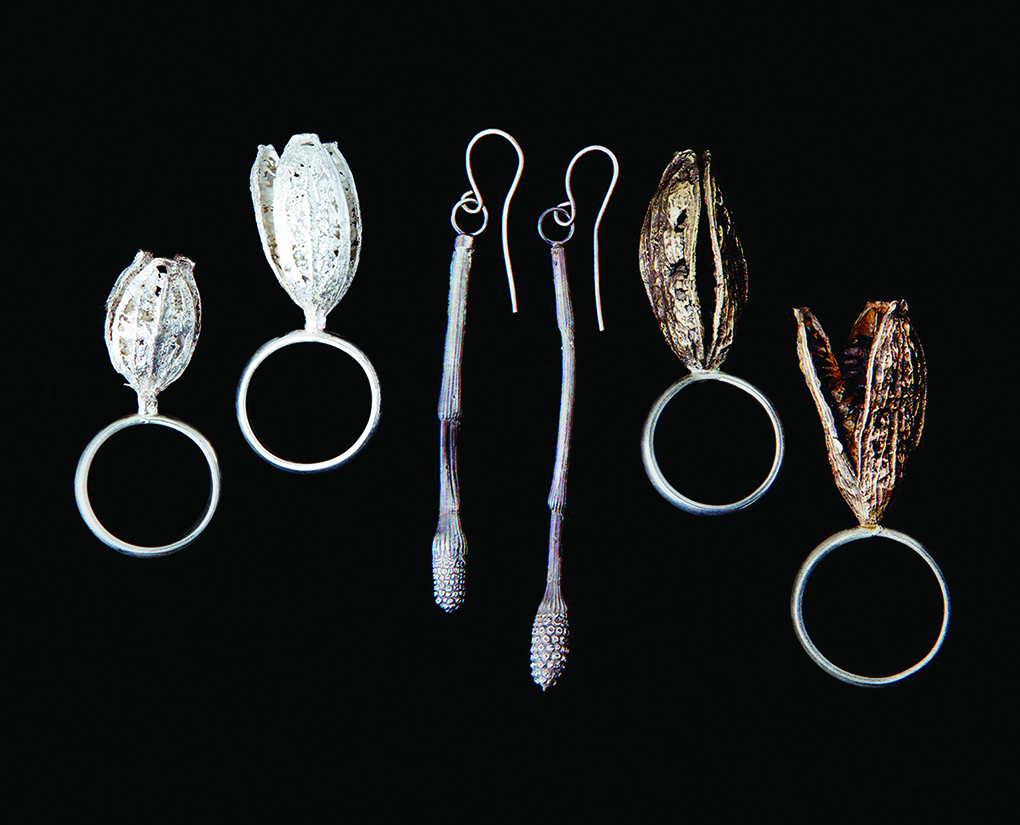
Four iris seed pod rings, silver and bronze
Pl. A

Iris seed pod rings.

Silver & bronze
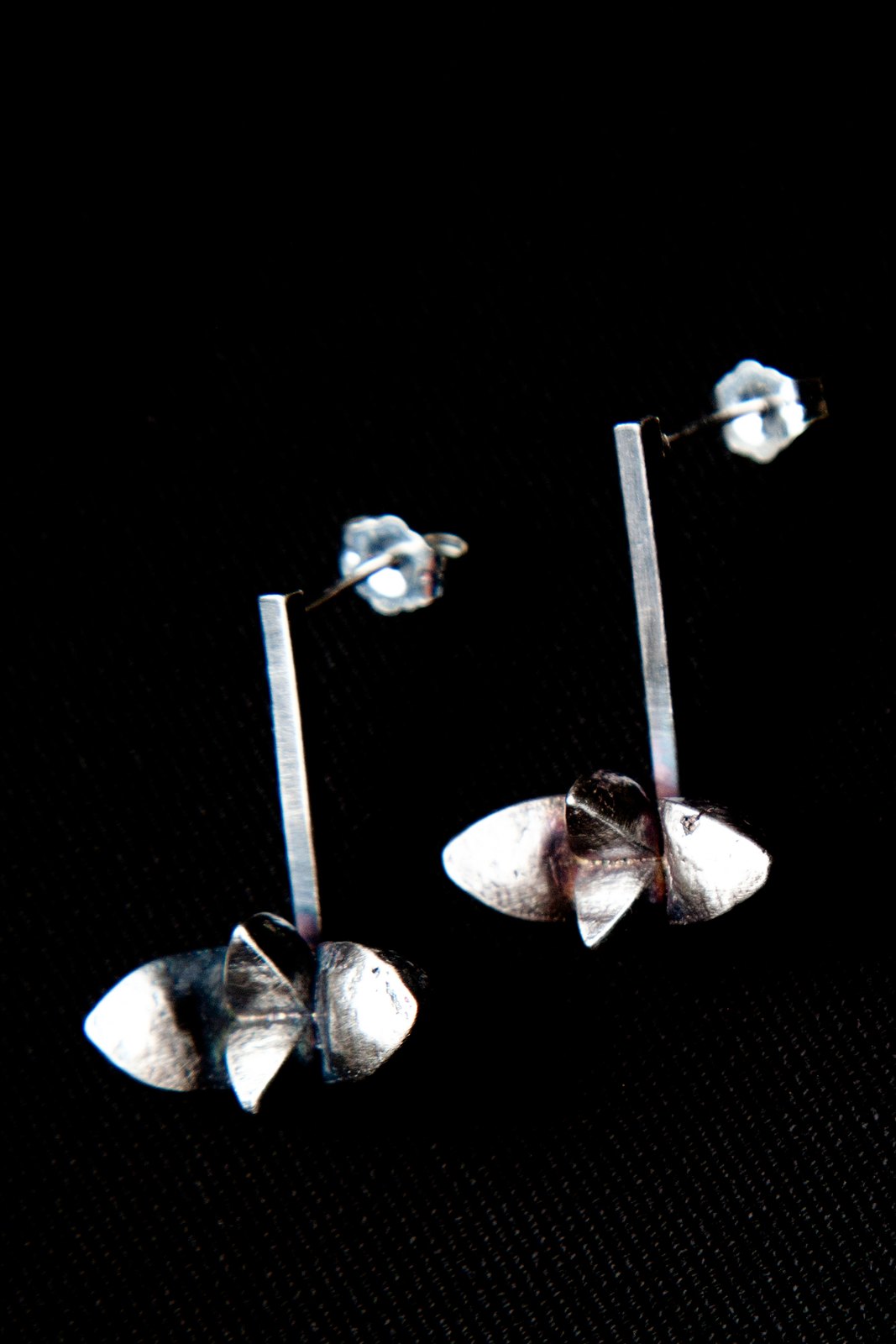
Seahorse tail earrings, cast in silver
Pl. B

Empennage.

Silver
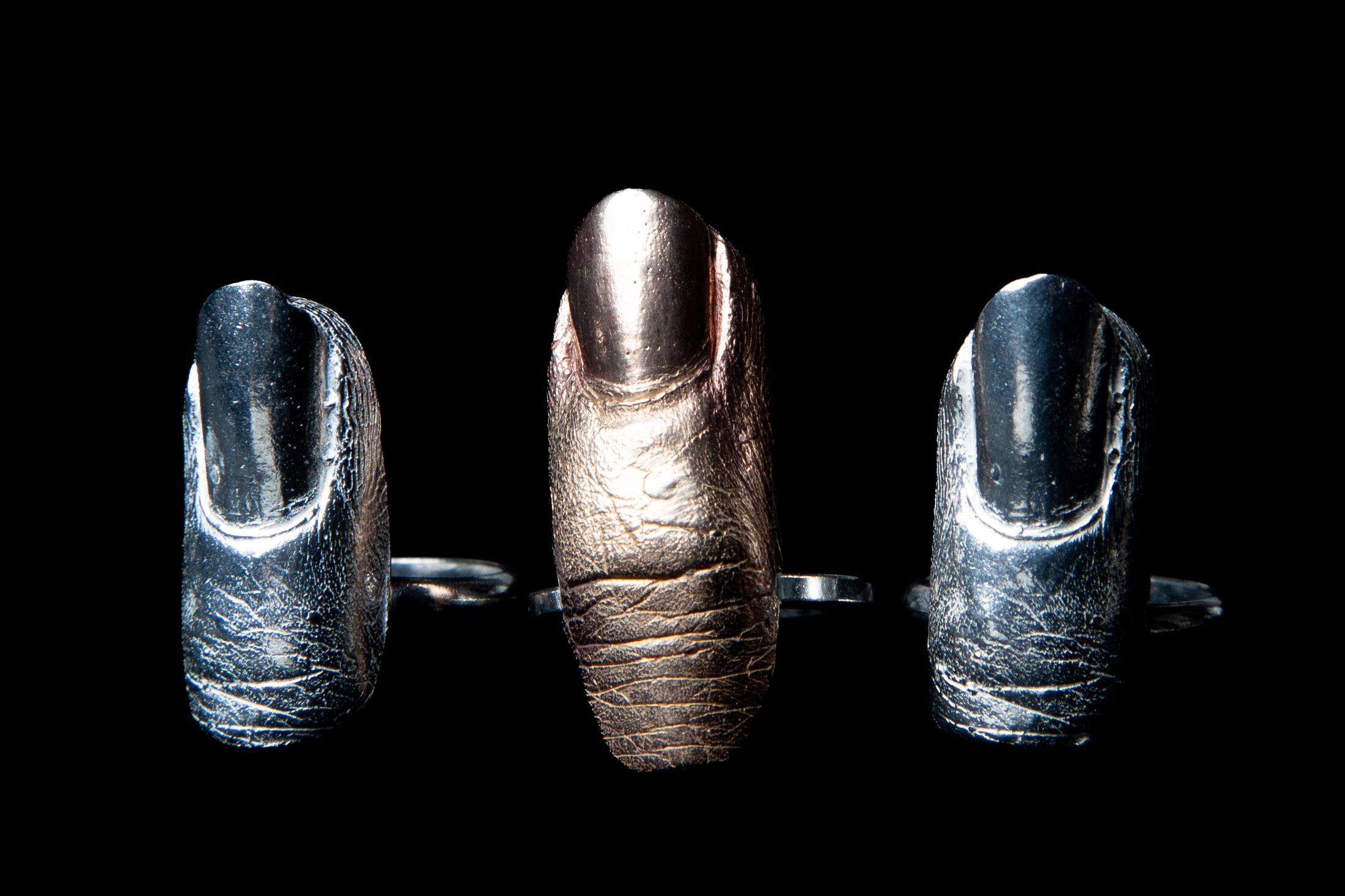
Three cast finger rings — two in sterling silver, one in bronze
Pl. C

Fingers.

Silver & bronze
The methodLost-wax casting

From field, to fire, to finish.

The sequence as it actually runs, a night in the kiln included.

Cast pieces in silver and bronze, returned from the same casting process
1,100 °F

The flask is stabilized here until the metal is melted.

  1. 01

    Gather

    Most specimens come from around Santa Cruz. A few come home from hikes and camping trips — cast to remember a place by.

  2. 02

    Build the tree

    A thick wax rod becomes the trunk; each botanical is joined to it with a thin wax sprue. The finished tree is weighed to calculate its weight in metal.

  3. 03

    Invest

    The tree is set inside a steel cylinder and surrounded with investment — a fine casting plaster that hardens against every pore of the plant.

  4. 04

    Burn out · overnight

    A kiln heats the flask in slow stages through the night, until the wax — and the plant itself — burns entirely away, leaving a hollow in its exact shape.

  5. 05

    Cast

    Metal melts in a crucible and the centrifuge forces the molten metal into the negative space that the plant and wax left behind.

  6. 06

    Quench & clean

    The flask is quenched in a water bucket and the plaster boils off. Brushes and dental tools pick the last of it from the recesses; an acid pickle strips the fire's oxide.

  7. 07

    Release

    A jeweler's saw cuts each casting from the tree. The stubs and sprues are saved — they melt again in the next pour.

  8. 08

    Fabricate & finish

    Sawing, filing, soldering, fabricating; then patina, polish, wax. Some castings stay unpolished — the texture of the plant remains.

Wei HwuWild Cast Jewelry

The artist.

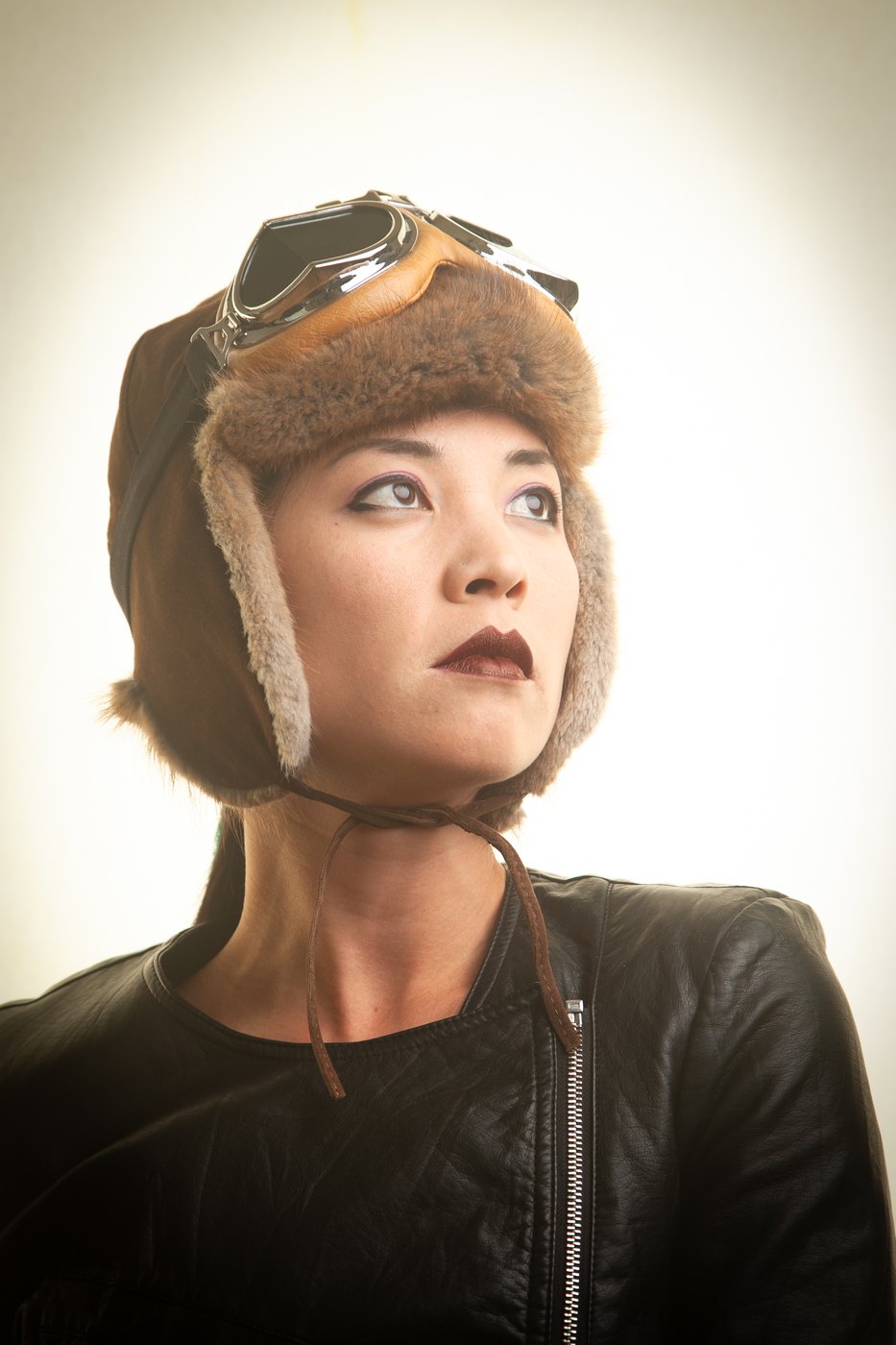
Wei Hwu, wearing an aviator cap and goggles

Wei Hwu is a metalsmith in Santa Cruz, CA, and started her humble beginnings as a metals artist at Cabrillo College in 2019.

She began the journey with the introductory class, metalsmithing, enameling, and fabrication — and skipped casting for many semesters, having decided that it probably wasn't for her!

It only took the first carving assignment, and 25 hours spent carving a California leaf-nosed bat, to decide that casting was the favorite process. The amount of detail rendered inspired experimentation with botanical items from the local area.

Based
Santa Cruz, CA
Training
Cabrillo College metal arts, since 2019
Metals
Sterling silver · bronze · shibuichi (a fine silver & copper alloy)
Pricing
Every piece is unique — please enquire
Selected
Santa Cruz Open Studios 2026

“I hope people are reminded of the importance of our connection with the natural world.”

Wei Hwu
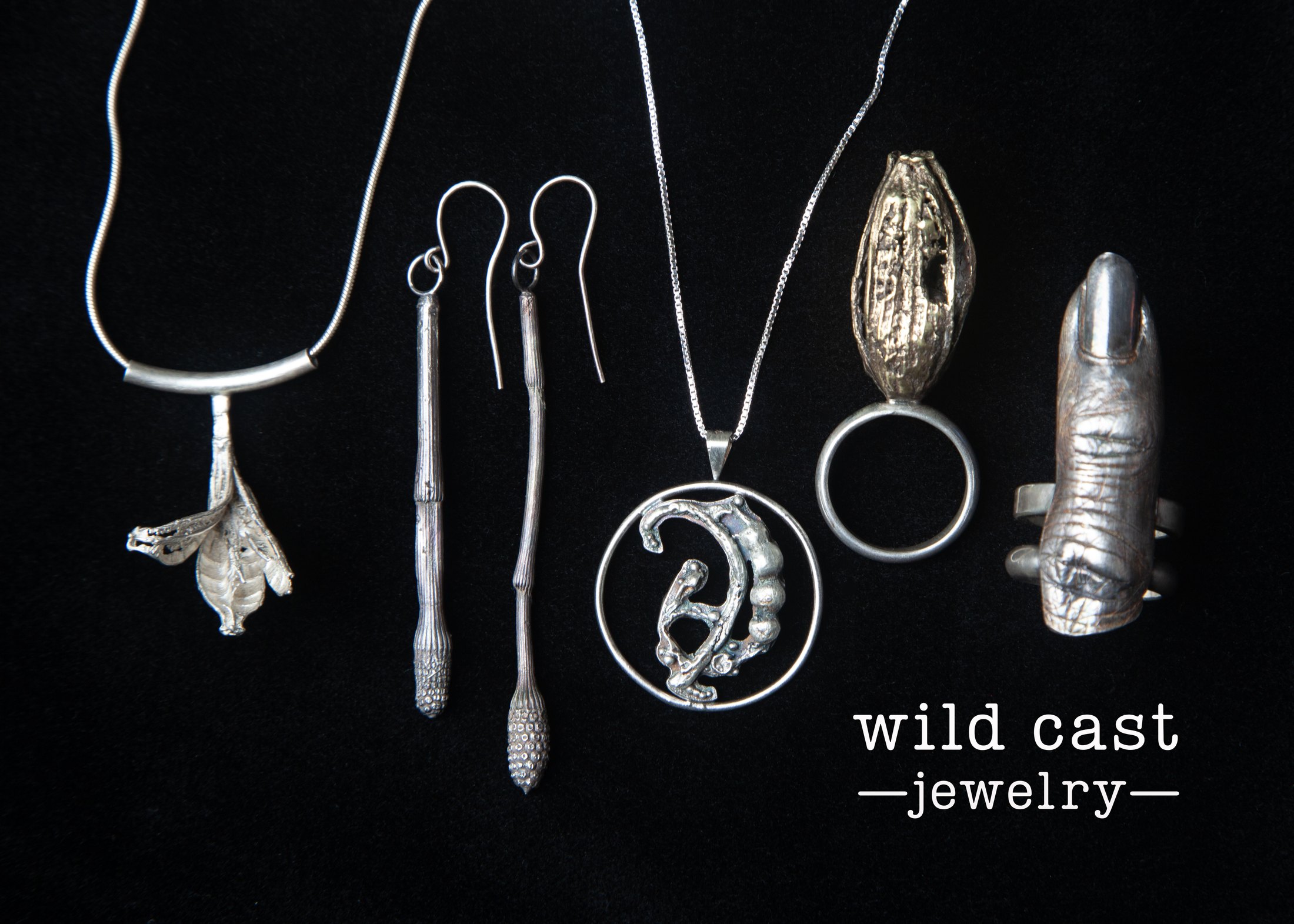
Wild Cast Jewelry — seed pod pendant, horsetail earrings, seaweed-form pendant, bronze iris pod ring and a cast finger ring on black velvet, with the wild cast jewelry wordmark